How to improve the quality of the Web Camera? Special thanks to all my friend for the encouragement in writing this blog after long time Many of us working from home during this lock down and hosting meetings through Zoom, JioMeet, Google meet and Cisco WebeX. But all of us are worried about the video quality of our laptop camera i will share my own experience on how do i improved it for my regular meetings and classes. these pictures are sample- screenshots taken during my webinar research and invited talks at certain organization. When i was looking for the better resolution, and after few minutes of browsing i found Snap Camera and Droidcam which serve better for this purpose. Snap camera is not supporting Linux distro, therefore i tried with Droidcam. This application is available for free download, it is suitable for all type of OS, Download by clicking this https://www.dev47apps.com/ ...
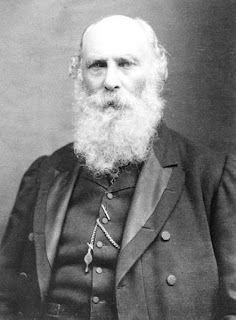
Hi everybody! The entire modern science is hanging around the electricity. The back bone of all recent trends and advancement of science, is the discovery of constituent particles of atom. One among them is ELECTRON. George Johnstone Stoney is the first person who introduced the name ELECTRON for negatively charged subatomic particle in the year 1891. It was a big challenge to many Scientists to understand the electricity. When electricity was invented, no one knew about electron. It was mystery over few decades. (ref., http://www.kidsnewsroom.org/elmer/infocentral/frameset/inventors/franklin/index.html ) On April 30, 1897 Physicist John Joseph Thomson and his team identified the subatomic particle ELECTRON by a cathode rays investigations. First He named the stream of subatomic particles as corpuscle in Latin, meaning sm...
REFER http://www.extremetech.com/computing/150615-researchers-create-first-room-temperature-nanoscale-lasers-a-major-step-towards-optical-computers Researchers create first room-temperature, nanoscale lasers: A major step towards optical computers By Sebastian Anthony on March 13, 2013 Nanophotonics researchers at Arizona State University have created the world’s first electrically powered room-temperature nanolasers. These lasers are the single most important step towards building computer chips that use light instead of electricity for ultra-fast and efficient on- and off-chip communications. Producing electrically powered nanoscale lasers has proven to be one of the toughest tasks facing electronic and photonic engineers. Over the last few years we have created very small on-chip lasers, but they need to be powered by a large, off-chip laser. We have also produced electrically powered (i.e. self-contained) lasers, but they require very cold temperatures (...

,Undated(DateGuessedEarly1890s).jpg)

Comments
Post a Comment